Michael Galasso Music

Michael Galasso's film scores are distinguished by their ability to inhabit the emotional landscape of a film without overwhelming it. Drawing from his classical violin training, his fascination with minimalism, and his deep engagement with Middle Eastern and Central Asian musical traditions, Galasso crafted soundtracks that became inseparable from the films they accompanied. His collaborations with directors such as Wong Kar-wai, Gabriele Salvatores, Babak Payami, and Sam Garbarski produced some of the most evocative film music of the late 20th and early 21st centuries.
Galasso viewed film music not as decoration but as an equal partner to the image. His scores often rely on repetition, slow development, and modal melodies that evoke a sense of timelessness. He frequently employed string instruments — particularly his own violin — processed through electronic means, creating textures that felt both ancient and contemporary.
His work with Wong Kar-wai demonstrated how a sparse, repetitive score could carry the emotional weight of unspoken longing, while his scores for Iranian and Turkish cinema revealed his sensitivity to non-Western musical traditions. Each collaboration was an act of cultural translation, bridging Galasso's American and classical heritage with the specific emotional geography of each film.
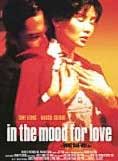
Perhaps Galasso's most celebrated film score, the music for In the Mood for Love became synonymous with the film's atmosphere of restrained desire and melancholic beauty. The main theme — a waltz that circles without resolution — mirrors the impossible love between the film's protagonists, who meet repeatedly but never consummate their attraction.
"...The musical score is a waltz, whirling without ever letting the melody get close to a logical ending, just as the couple does (...)"
— Thomas Sotinel, Le Monde, May 2000
"...accompanied by Michael Galasso's stringent, wistful score, allow for the enraptured contemplation of Cheung's moving form..."
— J. Hoberman, The Village Voice, February 2001
"Repetitive use of slow motion and Michael Galasso's lovely string compositions (...) give a richly sensual feeling to the film..."
— David Rooney, Variety, February 24, 2001

Galasso's first collaboration with Wong Kar-wai established the sonic template that would define their partnership. The score for Chungking Express drifts between the film's two interwoven stories of urban loneliness, using ethereal string arrangements that evoke the neon-lit anonymity of Hong Kong.

For this Iranian comedy-drama about a soldier escorting a female ballot official across a remote island on election day, Galasso composed a score that balances humor with cultural specificity. The music respects Iranian musical traditions while maintaining Galasso's distinctive minimalist voice.

A family saga exploring Jewish identity, memory, and the unifying power of the tango across generations. Galasso's score weaves together Ashkenazi musical traditions with the passionate rhythms of the tango, creating a music that speaks to displacement, nostalgia, and cultural continuity.

A meditation on tradition, calligraphy, and modernity set against the divided landscape of Cyprus. Galasso's score blends his minimalist sensibility with Turkish musical traditions, creating a soundscape that reflects the film's exploration of cultural identity and artistic heritage.

A coming-of-age thriller set in the sun-drenched fields of southern Italy during the summer of 1978. Galasso's score captures the film's dual atmosphere of childhood innocence and underlying menace, using childlike melodies that gradually reveal their darker undertones.
The collaboration between Hong Kong director Wong Kar-wai and Michael Galasso represents one of the most significant director-composer partnerships in contemporary cinema. Beginning with Chungking Express (1994) and reaching its apex with In the Mood for Love (2000), their work together redefined the relationship between image and music in Asian cinema.
Wong's improvisational shooting style — often filming without a completed script and editing in post-production — required a composer who could respond to images rather than work from a predetermined plan. Galasso's approach, rooted in improvisation and modal exploration, proved ideally suited to Wong's method. The director would send Galasso rough cuts, and the composer would respond with music that captured the emotional essence of the images.
The result was a body of work in which music and image achieved a rare equality. Galasso's scores do not illustrate Wong's images; they exist alongside them as parallel expressions of the same emotional states. This approach reached its culmination in In the Mood for Love, where the repetitive, circling quality of Galasso's waltz became as iconic as the film's visual style.
Their partnership demonstrated that film music could be both culturally specific and universally accessible, drawing on Western classical traditions while speaking to the emotional landscape of contemporary Asia. The influence of their collaboration can be heard in the work of numerous subsequent composers working in Asian and international cinema.
| Film Title | Director | Year | Country |
|---|---|---|---|
| Chungking Express | Wong Kar-wai | 1994 | Hong Kong |
| Albert Einstein: How I See the World | Documentary | 1991 | USA |
| In the Mood for Love | Wong Kar-wai | 2000 | Hong Kong / France |
| Secret Ballot (Raye Makhfi) | Babak Payami | 2001 | Iran / Italy |
| Angel on My Right Shoulder | Djamshed Osmonov | 2001 | Tajikistan |
| The Tango Rashevski | Sam Garbarski | 2002 | Belgium / Luxembourg |
| Mud (Çamur) | Derviş Zaim | 2002 | Turkey |
| I'm Not Scared (Io non ho paura) | Gabriele Salvatores | 2003 | Italy / Spain |
| Brodeuses (The Embroiderers) | Éléonore Faucher | 2004 | France |
| Histoire d'un Secret | Mariana Otero | 2004 | France |
"...these scenes often play without dialogue (...) accompanied by the lush, repetitive score by Michael Galasso (...)"
— Jeremiah Kipp, filmcritic.com, February 2001
"...With sublime production design, In the Mood for Love is a dream (...). Also helping is the melancholy, insinuating music by Michael Galasso and Shigeru Umebayashi..."
— Kenneth Turan, Los Angeles Times, February 2001
"Michael Galasso is neither classical nor post-modern, neither baroque nor avant-garde, neither American nor European, neither oriental nor occidental. (...) His music is above all an absolute dream of music, a sort of musical manifesto of a constantly questioned musical memory. (...) Michael Galasso's music is overwhelming because it is inexhaustible."
— Gilles Anquetil, Figura di Parola, July 1996