Michael Galasso Music

Michael Galasso's theatrical compositions represent one of the most significant bodies of work in contemporary stage music. Over three decades, he created scores for some of the most visionary directors and choreographers of our time, most notably Robert Wilson. His music for the stage is distinguished by its ability to inhabit dramatic space without dominating it — a sonic architecture that supports, comments on, and deepens the theatrical experience. From Ibsen to Strindberg, from Chekhov to Heiner Müller, Galasso's scores brought a distinctive voice to the great texts of the theatrical canon.
Galasso viewed theater music as an autonomous art form that exists in dialogue with the stage action. Unlike conventional incidental music, his scores were conceived as complete musical statements that could stand independently while remaining intimately connected to the dramatic context. Drawing on his classical violin training, his immersion in minimalism, and his deep engagement with Baroque and non-Western musical traditions, he created soundscapes that felt both ancient and contemporary.
His collaboration with Robert Wilson — spanning more than thirty years and more than a dozen productions — became one of the defining artistic partnerships of late 20th-century theater. Wilson's visual tableaux found their perfect sonic counterpart in Galasso's repetitive, modal compositions, creating a unified aesthetic that influenced generations of theater-makers.
The collaboration between director Robert Wilson and composer Michael Galasso stands as one of the most enduring and influential partnerships in contemporary theater. Beginning with "Overture" in 1972 and continuing through "Quartett" in 2006, their work together redefined the relationship between music, image, and text on the modern stage.
Wilson's signature style — characterized by slow, sculptural movement, stark lighting, and tableaux vivants — demanded a musical language that could sustain extended durations without becoming repetitive in the pejorative sense. Galasso's minimalist compositions, with their gradual transformations and modal melodies, proved ideally suited to this aesthetic. His music did not accompany Wilson's images; it existed alongside them as an equal partner in the theatrical experience.
Their productions traveled to the world's most prestigious stages — the Théâtre National de Chaillot in Paris, the Comédie-Française, the Vienna Festival, the Brooklyn Academy of Music — and earned some of the highest honors in European theater. Their staging of Strindberg's "A Dreamplay" was voted best foreign theater production of the 1999–2000 season by the French Theater and Music Critics Society, while "Les Fables de La Fontaine" for the Comédie-Française became a repertory staple following its 2004 premiere.
Together, Wilson and Galasso created a theatrical language in which music, light, movement, and text achieved a rare synthesis. Their influence can be seen in the work of contemporary directors and composers across Europe, Asia, and the Americas, and their productions remain reference points for anyone exploring the possibilities of music-theater.
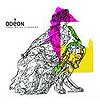
Galasso's final major collaboration with Robert Wilson, "Quartett" was Müller's devastating reworking of Laclos' Les Liaisons Dangereuses. The production, staged at the historic Théâtre de l'Odéon in Paris, featured an original score by Galasso that mirrored the psychological warfare of the play's two remaining aristocrats.
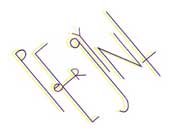
Galasso's reimagined score for Ibsen's epic poetic drama, created for Robert Wilson's Norwegian premiere. Rather than drawing on Grieg's familiar incidental music, Galasso composed an entirely new score that approached the text through his distinctive minimalist and modal vocabulary.
A critically acclaimed collaboration that entered the permanent repertoire of the Comédie-Française — a rare honor for a contemporary production. Wilson and Galasso brought La Fontaine's timeless fables to life through a synthesis of visual poetry, classical French verse, and evocative original music.
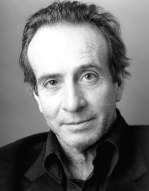
Wilson and Galasso's interpretation of Chekhov's masterpiece of provincial longing and missed opportunities. The production emphasized the play's musicality — its pauses, its repetitions, its circling conversations — through a score that mirrored Chekhov's own compositional approach to dramatic time.

A live orchestral score for the theatrical adaptation of the German expressionist silent film classic. Galasso's music provided the sonic counterpart to Wilson's staging, which reimagined the film's distorted sets and psychological horror through contemporary theatrical language.

Voted the best foreign theater production of the 1999–2000 season by the French Theater and Music Critics Society, "A Dreamplay" represents one of the high points of the Wilson-Galasso partnership. Strindberg's dream-logic narrative found its perfect sonic counterpart in Galasso's neo-baroque minimalist score.
"...Michael Galasso's score, played on viol de gamba, baroque cello, theorbo, marimba, beguilingly recreates in its neo-baroque minimalism, the repetitions, the ostinati, the themes and variations of the play and of the production."
— Hilary Foutch, The Times, November 1998

Wilson and Galasso's interpretation of Ibsen's late masterpiece about a woman torn between domestic duty and the call of the sea. The production toured internationally and was celebrated for Galasso's evocative score, which critics singled out as the production's greatest achievement.
"...the only real winner of this prestigious international match involving four players: the marvelous musical score by Michael Galasso."
— Franco Cordelli, Il Corriere della Sera, May 13, 1998
The Wilson-Galasso partnership began in the early 1970s with a series of experimental productions that established the aesthetic principles they would refine over the following decades. These early works, created in New York's downtown avant-garde scene, laid the foundation for everything that followed.
"Overture" (1972) marked Galasso's first collaboration with Wilson, establishing the composer as Wilson's musical voice of choice. This was followed by "The Life and Times of Joseph Stalin" (1973), an epic theatrical biography that demanded a score of unusual scope and variety.
"A Letter for Queen Victoria" (1974–75) and "The 5 Value of Man" (1975) further refined the partnership's distinctive language — a synthesis of slow movement, ritualistic gesture, and music that existed as an autonomous dramatic force rather than mere accompaniment.
These early productions established Galasso as a composer who could match Wilson's visual imagination with an equally powerful sonic vision. The success of these works led directly to the international commissions that would define both artists' careers in the decades that followed.
Beyond his work with Robert Wilson, Galasso composed and performed original music for some of the most innovative choreographers of the late 20th century. His collaborations with Karole Armitage, Andy DeGroat, and Lucinda Childs represent a significant body of work that bridges contemporary dance and contemporary classical music.
1980s – 2000s
Galasso composed and performed music for Armitage's groundbreaking "drone ballet" style, which combined classical technique with punk and new wave aesthetics.
1970s – 1990s
A long-standing collaboration with one of the pioneers of French postmodern dance. Galasso's music provided the sonic foundation for DeGroat's fluid, improvisational choreography.
1980s – 2000s
Collaborations with one of American minimalism's most important choreographers, whose precise, repetitive movement vocabulary found its perfect counterpart in Galasso's compositional style.
| Production | Director / Ensemble | Year | Venue / Notes |
|---|---|---|---|
| Overture | Robert Wilson | 1972 | First Wilson-Galasso collaboration |
| The Life and Times of Joseph Stalin | Robert Wilson | 1973 | Epic theatrical biography |
| A Letter for Queen Victoria | Robert Wilson | 1974–75 | Experimental production |
| The 5 Value of Man | Robert Wilson | 1975 | Early signature work |
| Quarantine | Various | 1980 | Brussels premiere |
| Scan Lines | Various | 1984 | New York production |
| Chained Melody | Various | 1985 | Los Angeles premiere |
| Lady from the Sea | Robert Wilson / Ibsen | 1998 | International tour |
| A Dreamplay | Robert Wilson / Strindberg | 1998 | Théâtre National de Chaillot, Paris |
| Three Sisters | Robert Wilson / Chekhov | 2001 | International production |
| The Cabinet of Doctor Caligari | Robert Wilson | 2002 | After the 1920 silent film |
| Les Fables de La Fontaine | Robert Wilson / Comédie-Française | 2004 | Entered Comédie-Française repertory |
| 2 Lips and Dancers in Space | Robert Wilson / Nederlands Dans Theater | 2004 | Premiere: Luxembourg |
| Peer Gynt | Robert Wilson / Ibsen | 2005 | Premiere: Oslo, Norway |
| Quartett | Robert Wilson / Heiner Müller | 2006 | Théâtre de l'Odéon, Paris |
"And Indra's Daughter (...) descends as if down a banister into a world of chill blue-grey light, and the fragile echoes of period instruments. Michael Galasso's score, played on viol de gamba, baroque cello, theorbo, marimba, beguilingly recreates in its neo-baroque minimalism, the repetitions, the ostinati, the themes and variations of the play and of the production."
— Hilary Foutch, The Times, November 1998
"...Nothing else is there. Except, though, the only real winner of this prestigious international match involving four players: the marvelous musical score by Michael Galasso."
— Franco Cordelli, Il Corriere della Sera, May 13, 1998
"Virtuoso violinist and conductor Michael Galasso's 'Scene VI' joyously brings together pizzicato, bowed noted notes, inflexions and strange glissandi - like a fantastic dream evoking an imaginary Orient."
— Daniel Caux, Théâtre de la Ville, Paris, February 1, 1989
"After Cage/Cunningham, it is undoubtedly Robert Wilson with Michael Galasso and Alan Lloyd who introduced a new non-pernicious relationship between sound and image. The music is integrated with the entire theatrical work without losing its autonomy and at the same time continuously commenting on the scenic and choreographic elements."
— Patrick Bossart, Pour la Danse, Paris, March-April 1989
"Who would have thought that music (by Michael Galasso) could be Vivaldi-chaste and raga-hypnotic? That 30 seconds could turn a tear into a snarl into a bellylaugh?"
— Robert Jones, New York Daily News, May 10, 1975
"Michael Galasso performs diabolical music. The grating harmonies and raging pantings of Paganini, insistent groaning, feverish sarcasm, poignant monotony. Michael Galasso is on the edge, the Satan who conducts the ball of the year 2000 for the cybernetic children we will become."
— Jacques Frank, La Libre Belgique, Bruxelles, November 6, 1980