Michael Galasso Music

Before Michael Galasso was a composer, before he was a film scorer or theatrical collaborator, he was a violinist — and the violin has remained the constant thread running through every phase of his artistic life. Born to a concert violinist father and an oboist mother, Galasso began studying the violin at age three and made his solo debut with the New Orleans Philharmonic performing Vivaldi's Concerto in A minor at just eleven years old. From that earliest performance to his revolutionary electronic violin work of the 1980s and 1990s, the violin has been Galasso's primary voice — an instrument through which he has synthesized Baroque virtuosity, minimalist structure, and the modal languages of the Middle East and Central Asia into a sound entirely his own.
Michael Galasso resists easy classification. He is neither purely classical nor purely avant-garde, neither strictly Western nor Eastern. His violin technique draws on the virtuoso tradition of Paganini, the contrapuntal rigor of Bach, the hypnotic repetition of Steve Reich, and the modal expressiveness of Persian and Central Asian masters. The result is a playing style that critics have described as everything from "diabolical" to "sublime" — a voice that can evoke the sacred and the profane, the ancient and the futuristic, often within the same phrase.
What distinguishes Galasso as a violinist is not merely technical mastery — though that is considerable — but his ability to make the violin speak in a voice that is simultaneously intimate and epic, precise and improvisatory. Whether performing solo chamber concerts, accompanying Robert Wilson's theatrical tableaux, or processing his instrument through electronics for Karole Armitage's dance works, Galasso approaches the violin as a living, breathing entity — an extension of his own musical thought.
Galasso's formation as a violinist unfolded across several distinct but interconnected worlds — the classical conservatory tradition, the American South's musical heritage, the downtown New York avant-garde, and the musical cultures of Iran and Central Asia. Each layer added depth to his technique and breadth to his expressive range.
Age 3 – 11
Began violin studies at age three under the guidance of his father, a concert violinist. Immersed from birth in a household where classical music was daily practice.
Age 11
Performed Vivaldi's Concerto in A minor with the New Orleans Philharmonic — an early sign of the virtuoso gifts that would define his career.
Late 1960s
Continued formal studies at Oberlin College and Dartmouth College, deepening his classical technique while encountering contemporary musical thought.
Age 18
A transformative meeting with John Cage at age 18 opened Galasso to the possibilities of the avant-garde, indeterminacy, and the breaking of classical conventions.
1970s – Present
Deep engagement with Iranian, Persian, and Central Asian musical traditions expanded his modal vocabulary and transformed his approach to melody and ornament.
1980s – 1990s
Pioneering work with electronic processing of the violin, creating textures that bridged the acoustic and the synthetic, the ancient and the futuristic.
To hear Michael Galasso play the violin is to encounter a sound that seems to exist between categories — between classical and popular, between East and West, between the acoustic and the electronic, between the ancient and the contemporary. His tone is at once precise and sensuous, disciplined and improvisatory. He draws on the full technical resources of the classical violin tradition — the clean articulation of Baroque playing, the virtuosic fireworks of Paganini, the contrapuntal thinking of Bach — while subjecting them to the influence of minimalist repetition, modal exploration, and electronic transformation.
What emerges is a voice that is unmistakably Galasso's own. Critics have struggled to describe it: "Vivaldi-chaste and raga-hypnotic" (New York Daily News), "diabolical" (La Libre Belgique), "a flood of suave calculation" (La Repubblica). Each description captures an aspect of his playing, but none captures its totality. The Galasso sound is, as one critic wrote, "overwhelming because it is inexhaustible."
"Michael Galasso is neither classical nor post-modern, neither baroque nor avant-garde, neither American nor European, neither oriental nor occidental. (...) Pergolese, Vivaldi, Steve Reich, an ancient Persian or Indian master, a minimalist or electronic enchanter, belong to his inheritance or to his memory. But his music is above all an absolute dream of music, a sort of musical manifesto of a constantly questioned musical memory."
— Gilles Anquetil, Figura di Parola, July 1996
Galasso's violin technique draws on a wide range of traditions, synthesizing them into a distinctive vocabulary. The following techniques are hallmarks of his playing:
The use of plucked strings to create intricate contrapuntal textures, evoking the lute and harpsichord traditions of the Baroque while maintaining a distinctly contemporary voice.
Bach, Vivaldi, Baroque lute traditions
Unconventional sliding techniques that create otherworldly, vocal-like effects — evoking the microtonal inflections of Middle Eastern and Central Asian musical traditions.
Persian, Turkish, Central Asian modes
Hypnotic, gradually transforming patterns that sustain extended durations — a minimalist approach that draws on Reich and Glass while maintaining melodic warmth.
Steve Reich, Philip Glass, minimalism
Demanding technical passages — rapid arpeggios, left-hand pizzicato, harmonics, double stops — deployed not for display but for dramatic and emotional effect.
Paganini, Bazzini, Italian virtuoso tradition
Live violin transformed through electronic means — delay, reverb, distortion, looping — creating textures that feel simultaneously ancient and futuristic.
1980s–90s experimental electronics
Melodic lines drawn from non-Western modal systems — Persian dastgāh, Turkish makam, Central Asian shashmaqom — brought into dialogue with Western harmonic thinking.
Iranian, Persian, Central Asian traditions
Subtle variations in bow pressure, speed, and contact point that create a wide palette of tonal colors — from ethereal whispers to fierce, biting tones.
French bowing school, Russian tradition
Using multi-tracking or live electronics to create counterpoint against himself — the violin answering the violin, creating a conversation within a single instrument.
Bach solo sonatas, electronic music
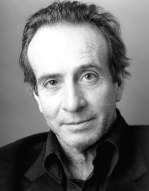
A landmark concert that established Galasso as a major voice in contemporary chamber music. The program featured original compositions that drew on his full range of influences — Baroque, minimalist, Middle Eastern — performed with an ensemble of exceptional musicians.
"Virtuoso violinist and conductor Michael Galasso's 'Scene VI' joyously brings together pizzicato, bowed noted notes, inflexions and strange glissandi — like a fantastic dream evoking an imaginary Orient."
— Daniel Caux, Théâtre de la Ville, Paris, February 1, 1989
An Italian concert that showcased Galasso's mature style — a synthesis of Baroque precision, minimalist structures, and electronic experimentation. Critics singled out his ability to combine seemingly contradictory elements into a coherent, compelling whole.
"His music is a flood of suave calculation, where baroque and minimalism, ethnic and pop sudden starts combine in great harmony, where you can hear Paganini's diabolic trío and Gershwin's sinuosity, where an electronic violin multiplies its own sound, creating a counterpoint from a Bach to it."
— Fulvio Paloscia, La Repubblica, April 24, 1997
Galasso's first public performance as a solo violinist — a remarkable debut for a child of eleven, performing one of the cornerstones of the violin repertoire with a major American orchestra. This early performance signaled the virtuoso gifts that would define his entire career.
Galasso's recorded legacy as a violinist is anchored by two landmark albums for ECM Records and Virgin Records, both of which place the violin at the center of his compositional and performative vision. These recordings document the evolution of his violin voice from the acoustic intimacy of Scenes to the ensemble-based luminosity of High Lines.
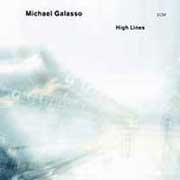
Galasso's second album for ECM Records, and perhaps the definitive document of his violin artistry. The album features an ensemble of exceptional musicians — guitar, percussion, double-bass — but the violin remains the central voice, weaving through the textures with Galasso's characteristic blend of precision and expressiveness.
Personnel:

Galasso's debut solo album, a collection of atmospheric chamber pieces that established his signature voice. The violin is featured prominently — sometimes solo, sometimes with ensemble — in compositions that draw on Baroque, minimalist, and Middle Eastern traditions. The album revealed a composer-performer of rare originality.
Personnel:
Michael Galasso's violin artistry draws on a remarkably wide range of musical traditions. Understanding these influences helps illuminate the distinctive qualities of his playing — its technical precision, its emotional range, its refusal to be confined by genre or geography.
The foundation of Galasso's technique lies in the Baroque tradition — the contrapuntal clarity of Bach, the melodic brilliance of Vivaldi, the virtuosic fireworks of Paganini. His father, a concert violinist, gave him early immersion in this repertoire, and Galasso has never abandoned it. Even in his most experimental works, the influence of Baroque thinking — its emphasis on counterpoint, ornament, and formal clarity — remains audible.
Galasso's encounter with John Cage at age 18 opened him to the possibilities of the avant-garde, and his subsequent engagement with the minimalist movement — particularly the work of Steve Reich and Philip Glass — profoundly shaped his compositional and performative approach. The repetitive structures, gradual transformations, and hypnotic ostinati of minimalism became central to his violin language.
Perhaps the most distinctive influence on Galasso's violin voice is his deep engagement with the musical traditions of Iran, Persia, and Central Asia. The modal systems of these traditions — the Persian dastgāh, the Turkish makam, the Central Asian shashmaqom — introduced him to melodic and microtonal possibilities largely absent from Western classical music. His glissandi, his ornamentation, his sense of melodic development all bear the mark of this engagement.
Born in Louisiana — the land of jazz, blues, and rhythm'n'blues — Galasso has always carried the rhythmic vitality of American roots music in his playing. Even in his most austere compositions, there is a pulse, a sense of groove, that distinguishes his work from more European-sounding minimalism. This American heritage gives his violin playing a physicality that is rare in contemporary classical music.
Beginning in the 1980s, Galasso began exploring the possibilities of electronic processing for the violin — delay, reverb, distortion, looping. This work, particularly in collaboration with choreographers like Karole Armitage, expanded the instrument's sonic palette and established Galasso as a pioneer of the electronic violin. His processed violin textures — at once ancient and futuristic — became a signature element of his sound.
| Performance | Venue / Context | Date | Role |
|---|---|---|---|
| Solo Debut — Vivaldi Concerto | New Orleans Philharmonic | Age 11 (c. 1960) | Solo violinist |
| Early Robert Wilson collaborations | New York downtown scene | 1972 – 1975 | Violinist, composer |
| Quarantine | Brussels | 1980 | Violinist, composer |
| Scan Lines | New York | 1984 | Violinist, composer |
| Chained Melody | Los Angeles | 1985 | Violinist, composer |
| Karole Armitage collaborations | International tours | 1980s – 2000s | Live violin performance |
| Chamber Music Concert | Théâtre de la Ville, Paris | February 1, 1989 | Violinist, conductor, composer |
| Andy DeGroat collaborations | Paris | 1975 – 1995 | Live violin performance |
| Chamber Music Concert | Florence, Italy | April 24, 1997 | Violinist, composer |
| Scenes (album recording) | Virgin Records | 1998 | Violinist, conductor, composer |
| Lucinda Childs collaborations | American & European venues | 1980s – 2000s | Live violin performance |
| High Lines (album recording) | ECM Records | March 2005 | Violinist, composer |
"Michael Galasso is neither classical nor post-modern, neither baroque nor avant-garde, neither American nor European, neither oriental nor occidental. (...) Galasso sincerely hates lyrical effusion. (...) He is refusing any temptation of fusion and confusion. Pergolese, Vivaldi, Steve Reich, an ancient Persian or Indian master, a minimalist or electronic enchanter, belong to his inheritance or to his memory. But his music is above all an absolute dream of music, a sort of musical manifesto of a constantly questioned musical memory. (...) Michael Galasso's music is overwhelming because it is inexhaustible."
— Gilles Anquetil, Figura di Parola, July 1996
"Virtuoso violinist and conductor Michael Galasso's 'Scene VI' joyously brings together pizzicato, bowed noted notes, inflexions and strange glissandi — like a fantastic dream evoking an imaginary Orient."
— Daniel Caux, Théâtre de la Ville, Paris, February 1, 1989
"His music is a flood of suave calculation, where baroque and minimalism, ethnic and pop sudden starts combine in great harmony, where you can hear Paganini's diabolic trío and Gershwin's sinuosity, where an electronic violin multiplies its own sound, creating a counterpoint from a Bach to it."
— Fulvio Paloscia, La Repubblica, April 24, 1997
"Michael Galasso performs diabolical music. The grating harmonies and raging pantings of Paganini, insistent groaning, feverish sarcasm, poignant monotony. Michael Galasso is on the edge, the Satan who conducts the ball of the year 2000 for the cybernetic children we will become."
— Jacques Frank, La Libre Belgique, Bruxelles, November 6, 1980
"Michael Galasso's score is riveting — austere, dense with overtones, suddenly blossoming out into street noise or growls or little jazz riffs."
— Michael Feingold, The Village Voice, September 18, 1984
"Michael Galasso's overlapping waves of ancient bugle calls manages an eerie grandiosity."
— William Wilson, Los Angeles Times, November 10, 1985
"Who would have thought that music (by Michael Galasso) could be Vivaldi-chaste and raga-hypnotic? That 30 seconds could turn a tear into a snarl into a bellylaugh?"
— Robert Jones, New York Daily News, May 10, 1975
"Mr. Galasso's typical compositional style results in an experience that is unusually evocative."
— Robert Palmer, New York Times, July 21, 1977